
Why Custom Code Websites Outperform Templates for SEO and AEO
Template websites have hidden SEO costs. Here's why custom-coded websites deliver superior search performance and AI visibility.
The Performance Gap
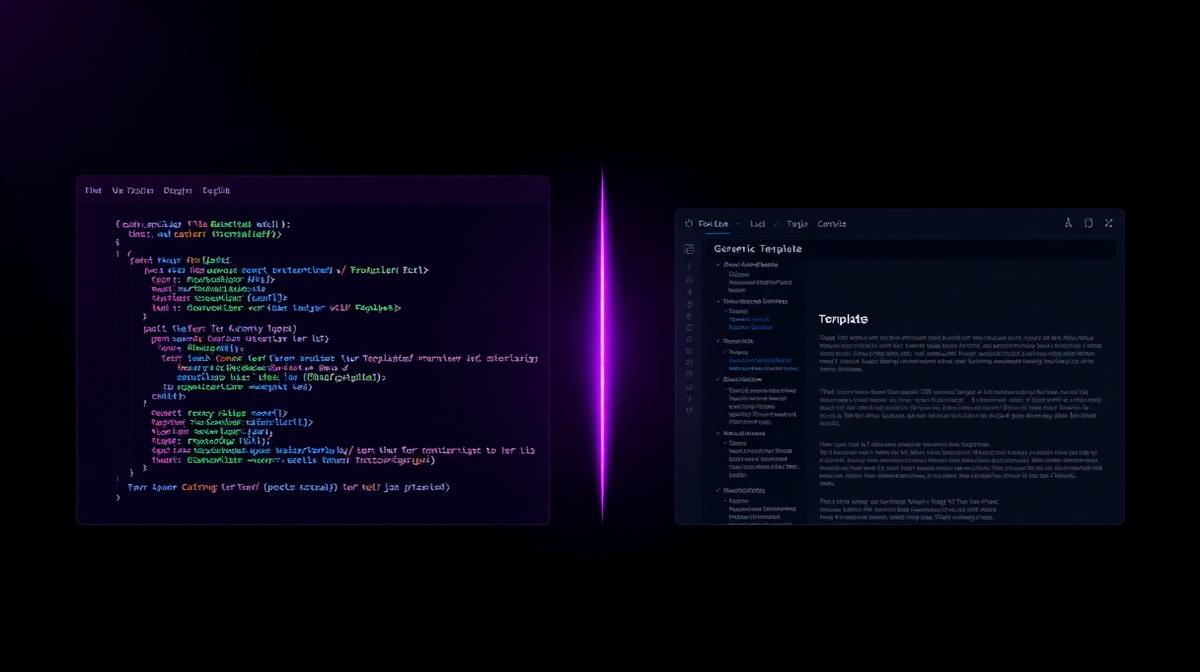
Custom-coded websites consistently outperform template-based sites on Core Web Vitals. Template sites carry the weight of their platform's framework, unused features, and plugin overhead. Custom sites include only the code necessary for your specific functionality, resulting in dramatically faster load times.
In our benchmarks, custom-coded client sites achieve LCP scores 2-3x faster than equivalent template-based sites. This performance gap directly translates to better rankings and higher conversion rates.
Code Quality Impact
Template platforms generate verbose, generic code. Custom development produces clean, semantic HTML with optimized CSS and minimal JavaScript. Search engines and AI systems can parse clean code more efficiently, leading to more accurate indexing and better content understanding.
Clean code also means fewer rendering issues, better accessibility, and more consistent cross-browser performance — all of which contribute to user experience signals that influence rankings.
Structured Data Control
Custom websites allow precise, comprehensive structured data implementation tailored to your business. Template platforms limit you to whatever schema their plugins support, often with suboptimal configuration. Custom implementation means you can add any schema type, nest related schemas, and ensure accuracy.
Scalability and Growth
Custom websites scale with your business without platform constraints. Need a new content type? A custom integration? A unique user experience? Custom code accommodates anything. Templates eventually hit walls that require workarounds — and workarounds create technical debt that hurts performance and SEO.
True Cost Analysis
Templates appear cheaper upfront but have hidden costs: monthly subscription fees, plugin costs, performance penalties, and eventual migration costs when you outgrow the platform. Custom websites have higher initial investment but lower long-term costs and significantly better ROI through superior search performance.
Frequently Asked Questions
Are template websites bad for SEO?
Templates aren't inherently bad for SEO, but they typically include bloated code, limited structured data control, and performance overhead that custom sites avoid. For competitive markets, these disadvantages compound into measurable ranking penalties.
How much faster are custom websites?
Custom-coded websites are typically 2-5x faster than template-based sites. They load only the code needed for each page, avoid plugin overhead, and can be optimized at every level of the stack.
When is a template website acceptable?
Templates are acceptable for businesses in non-competitive markets with limited budgets who need a basic web presence quickly. For any business competing for search visibility, custom code provides a significant competitive advantage.
Related Questions
What makes a website AI-readable?
An AI-readable website uses semantic HTML, server-side rendering so content is in the initial HTML response, comprehensive JSON-LD structured data, fast edge-served performance, accessible content that does not depend on JavaScript to render, and a clear information architecture that mirrors how the brand wants to be understood as an entity.
Read Answer →Web EngineeringDoes server-side rendering matter for AI search?
Yes. AI crawlers and many search bots either do not execute JavaScript or execute it inconsistently, so content that only appears after client-side rendering is often missed. Server-side rendering or static generation ensures your content, schema, and metadata are present in the initial HTML response that bots actually parse.
Read Answer →Web EngineeringShould I migrate my existing site or rebuild it from scratch?
It depends on the foundation. If the existing stack supports server-side rendering, structured data, and fast edge performance, a focused engineering pass is usually the best ROI. If the site is built on a slow, client-rendered, or schema-hostile foundation, a rebuild on a modern edge-first stack typically pays for itself faster than incremental fixes.
Read Answer →AEOWhat is Answer Engine Optimization (AEO)?
Answer Engine Optimization (AEO) is the discipline of engineering content, structured data, and entity authority so that AI answer engines — including ChatGPT, Perplexity, Google AI Overviews, Claude, and Gemini — cite your brand directly in their generated responses. AEO targets AI-mediated citations rather than traditional blue-link rankings.
Read Answer →